






















Lead Scoring is a system that helps you measure how ready a contact is to become a customer by assigning a numerical score based on their behavior, engagement, and profile data.
Instead of treating all contacts the same, Lead Scoring allows you to:
- Focus on your most engaged and high-intent leads
- Send the right message at the right time
- Improve conversion rates and reduce unnecessary outreach
Need to find your mostly “Ready to Buy” contacts fast?
Lead scoring is one of the most effective ways to find your most likely “ready to buy” contacts. The largest organizations in the world use lead scoring to determine when it’s the right time to send you a promotion or exclusive offer or to upsell you to a better product.
Usually, lead scoring comes bundled with the world’s priciest software packages, but now you can use our cost-effective and easy-to-set-up system to help you determine your ready buyers in just a few minutes.
You can set up a variety of triggers to increase or decrease a customer’s score based on events link opening or clicking a link in an email, filling out a form, visiting a web page, and more!
- We have:
- Lead Scoring Rules: These are the individual rules that define how points are assigned to contacts based on specific actions or conditions. Each rule specifies what to track, how many points to add or subtract, and when it applies.
- Lead Scoring Levels: These are the tiers or thresholds that categorize contacts based on their total lead score. For example, a contact with 0–50 points might be “Cold,” 51–100 “Warm,” and 101+ “Hot.” Levels help you prioritize follow-ups and segment contacts effectively.
Lead Scoring Rules
1. Edit your rules to suit your needs. Decide on the number of points you want to add or subtract and which kind of action will trigger the rule.
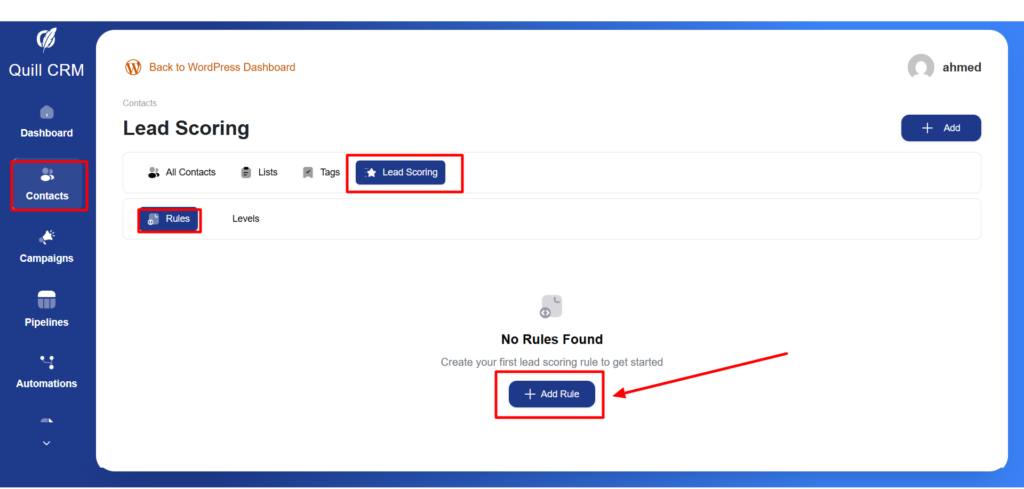
2. A pop-up window will appear, similar to the one shown below.
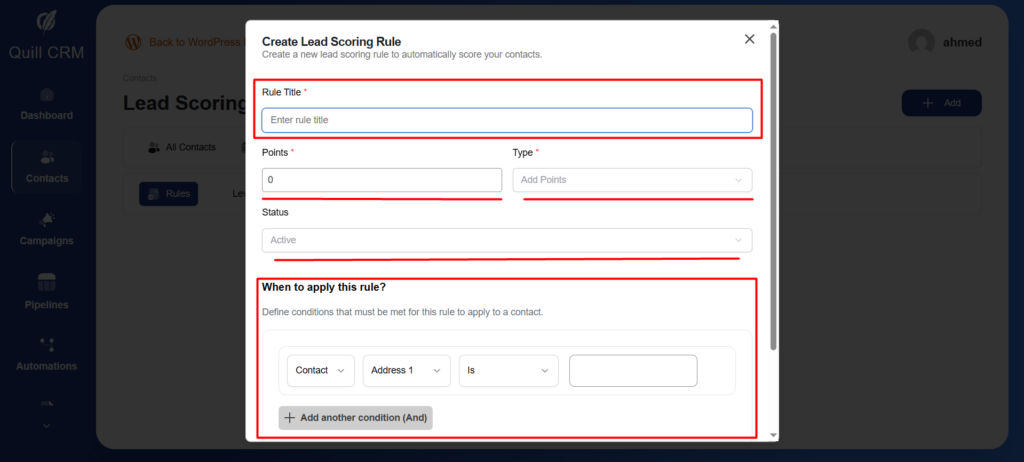
2.1 Fields You Need to Fill In
2.1.1 Rule Name
A descriptive name to help you identify the rule easily.
2.1.2 Points
The number of points that will be added to or subtracted from the contact’s score.
2.1.3 Type (Add or Subtract)
Defines whether the specified points should be added to or subtracted from the contact’s score when the rule is applied.
2.1.4 Status (Active or Inactive)
Determines whether the rule is currently enabled and applied to contacts, or disabled and ignored.
2.1.5 Conditions
The criteria that will be evaluated for each contact.
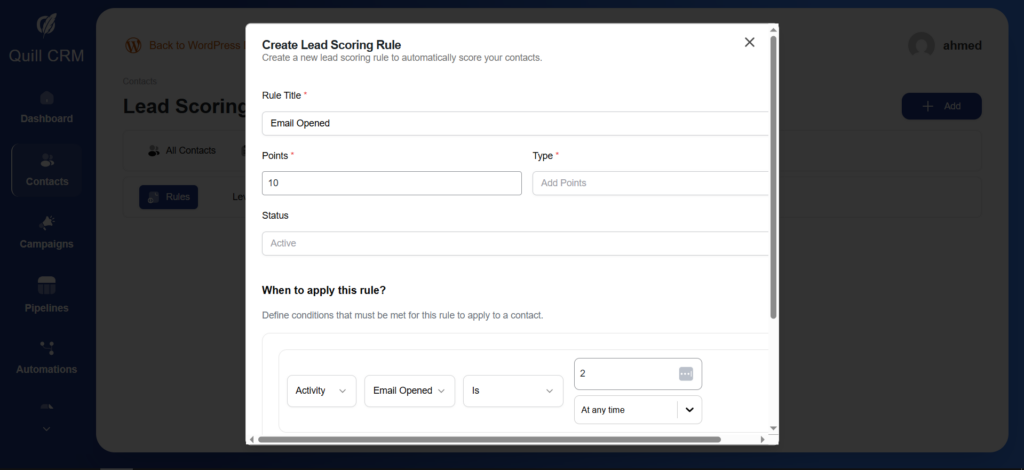
If the contact meets these conditions, the rule will be triggered and the points will be applied accordingly.
like this.
And this.
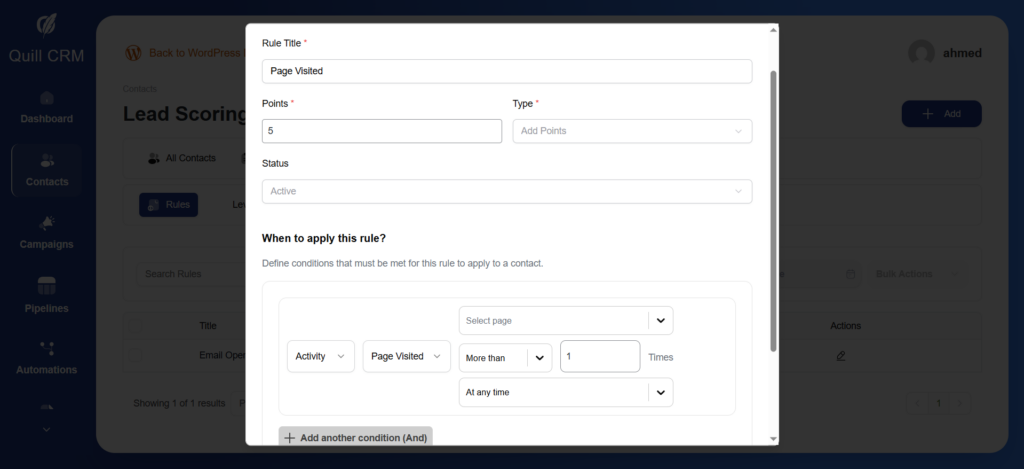
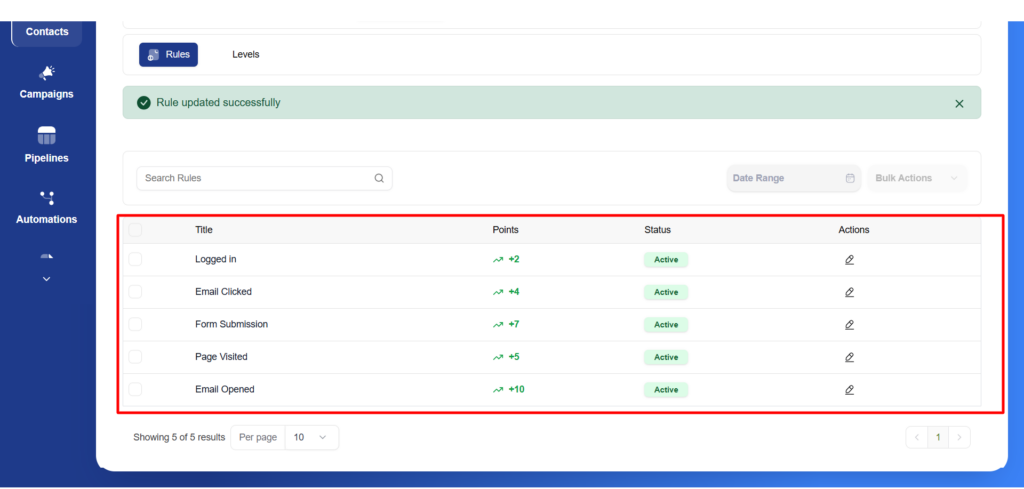
In the Rules tab, you will see all the rules you have created.
Lead Scoring Levels
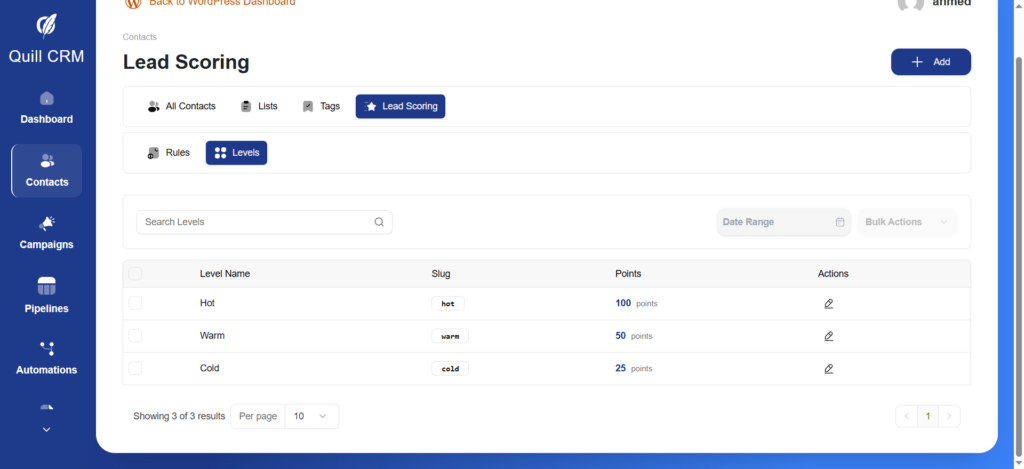
Lead scoring levels are tiers or categories that group contacts based on their total lead score. Each level represents a range of points accumulated from your lead scoring rules and helps you identify the engagement or readiness of a contact.
- Purpose: To prioritize leads, segment contacts, and focus on the most promising opportunities.
- Example:
- 0–50 points → Cold
- 51–100 points → Warm
- 101+ points → Hot
By setting lead scoring levels, you can quickly see which contacts need attention and automate actions such as follow-ups, notifications, or marketing campaigns.
1. Edit your lead scoring levels to fit your needs. Specify a name for each level and the minimum points required to reach it.
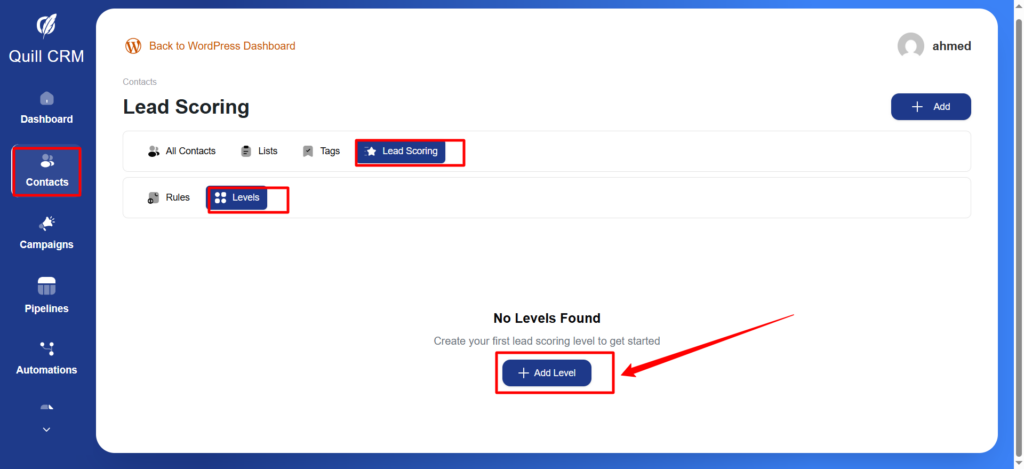
2. A pop-up window will appear, similar to the one shown below.
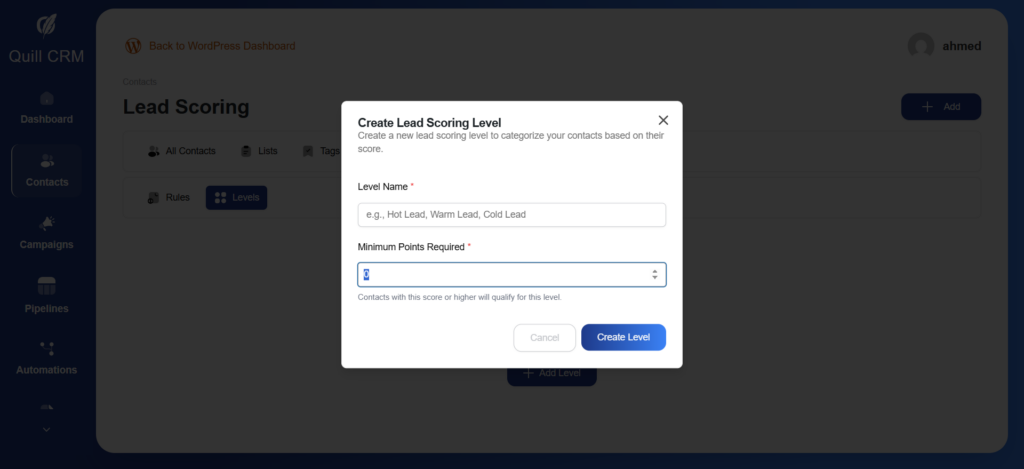
2.1 Fields You Need to Fill In
2.1.1 Level Name
A descriptive name for the level that helps you easily identify it (e.g., Cold, Warm, Hot).
2.1.2 Minimum points required
The minimum number of points a contact must have to be included in this level.
like this.
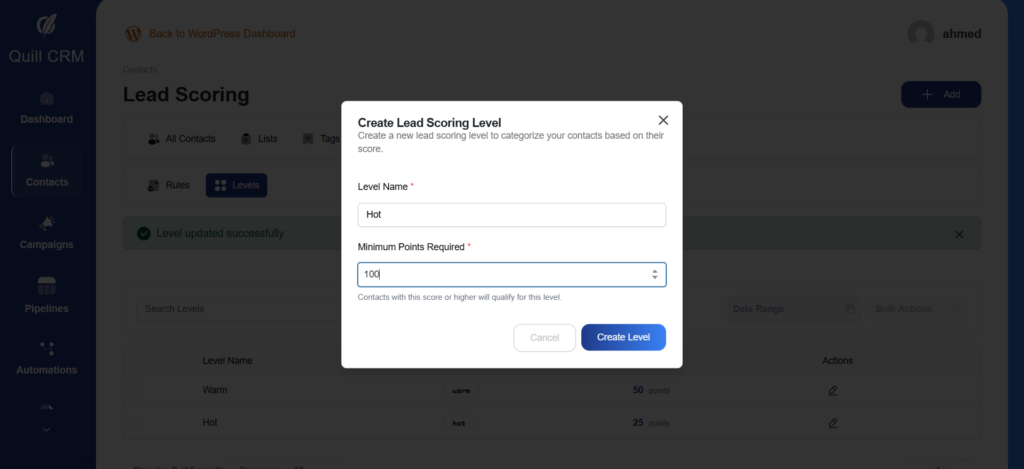
In the Levels tab, you will see all the levels you have created.
In conclusion, a Lead Scoring system is a powerful tool that helps evaluate and categorize leads based on their level of engagement and interest. By defining rules, assigning points, and setting scoring levels, businesses can focus their efforts on the most promising leads, increasing the efficiency of sales and marketing teams and improving overall success. Understanding and organizing rules and levels carefully enables data-driven decisions and better results.